Overview
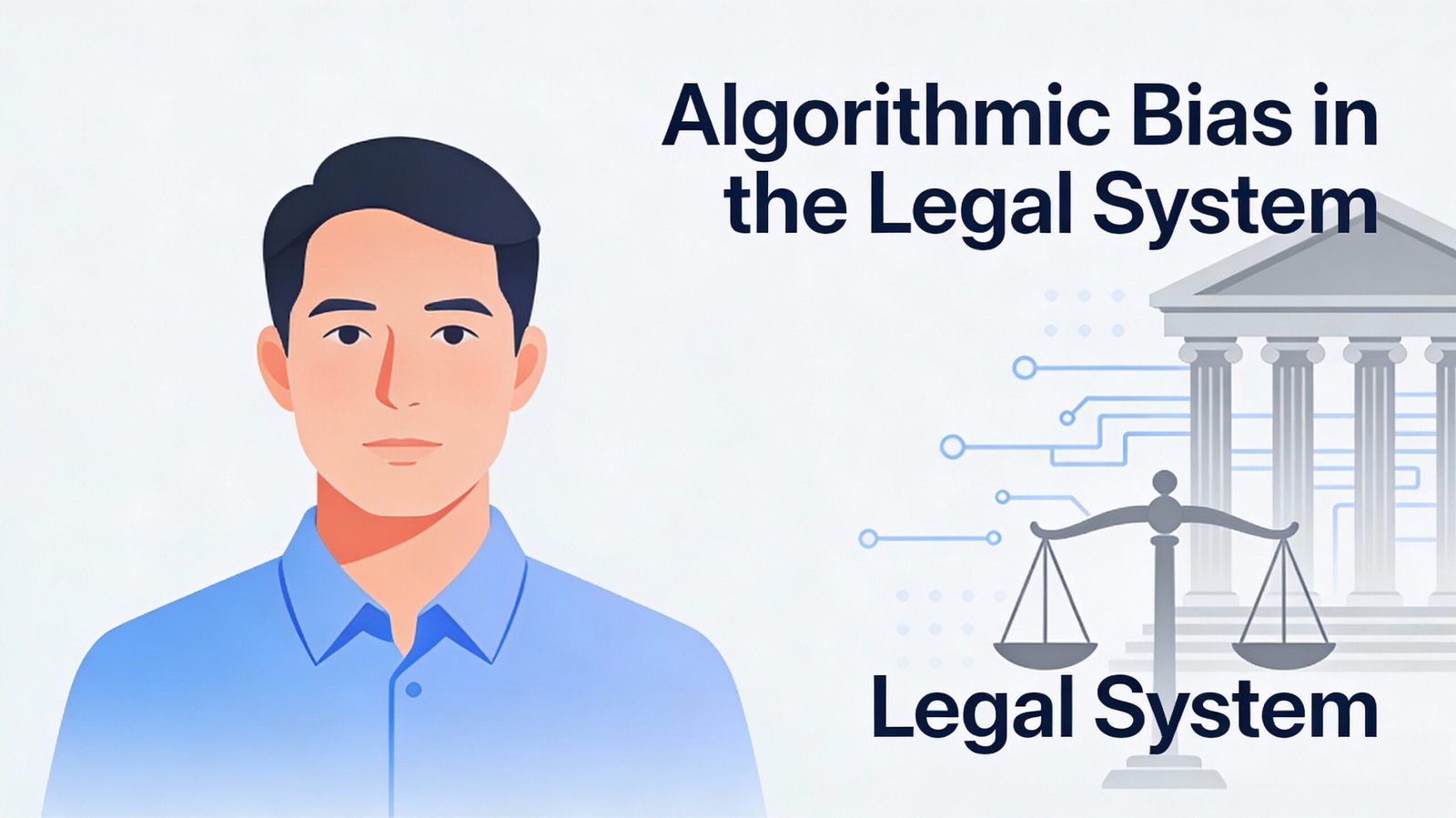
Algorithmic bias happens when AI systems produce results that systematically disadvantage certain people or groups, even when they appear neutral. In the legal system, this risk goes to the heart of equality before law, due process, and public trust in the judiciary.[2][3]
What is algorithmic bias in law?
In legal settings, algorithmic bias arises when tools used for bail, sentencing, predictive policing, document review, or legal research treat similarly placed individuals differently based on hidden patterns in data. These patterns often reflect past discrimination encoded in police records, court decisions, or socio‑economic data.[3][2]
Common sources of bias include:
- Biased historical data: If past policing or sentencing targeted particular communities more harshly, AI trained on that data will tend to repeat those patterns.[2]
- Proxy variables: Even if sensitive attributes are removed, proxies like neighbourhood, education, or employment status can reintroduce discrimination.[2]
- Opaque design choices: When models are optimised only for accuracy or speed, fairness, explainability, and legal safeguards are sidelined.[4]
How biased AI harms justice
When biased AI tools enter the justice system, their impact is not just technical but constitutional. Key harms include:[3]
- Skewed risk scores: Tools used internationally for predicting reoffending have been criticised for assigning higher risk scores to certain groups, influencing bail and sentencing in ways that are hard to scrutinise.[4]
- Unequal access to justice: Automated triage for legal aid or case‑prioritisation can quietly push poorer or marginalised litigants to the back of the queue.[2]
- Loss of transparency: If parties do not know an algorithm influenced their case, they cannot meaningfully challenge the reasoning behind the decision.[3]
Emerging safeguards
Across jurisdictions, judges, regulators, and bar bodies are beginning to respond to these risks. Some practical safeguards are:[2]
- Training judges and lawyers on AI’s limits, bias risks, and evidentiary implications.[2]
- Professional rules clarifying that lawyers remain responsible for AI‑assisted work, including checking outputs for fairness and reliability.[5]
- Requirements for transparency, such as explaining how tools are trained, what data they use, and where they are known to perform poorly.[3]
- Algorithmic impact assessments for high‑risk deployments in policing and courts, focusing on discrimination and rights impacts before rollout.[2]
A way forward for India
As Indian courts and institutions adopt AI for translation, case‑flow management, research, and drafting support, a clear regulatory framework is essential. Key elements could include:[6]
- Classifying AI used in bail, sentencing, predictive policing, and legal aid as “high‑risk,” subject to strict oversight and regular audits.[2]
- Mandating independent fairness and quality audits that examine disparate impact on protected groups and disclose key findings to oversight bodies.[3]
- Keeping humans firmly “in the loop,” with judges retaining final responsibility and recording reasons when they rely on AI recommendations.[7]
- Recognising a right for litigants to know when AI is used, to receive an understandable explanation, and to contest both the data and the model’s logic.[3]
Handled carefully, AI can help reduce delays and make legal information more accessible. Without strong safeguards against algorithmic bias, however, it risks deepening existing inequalities and weakening confidence in law and the courts.[2]
About the Author
Sumanth Garakarajula is an advocate based in Hyderabad, Telangana, with a practice focused on litigation and advisory work at the intersection of law and emerging technologies. He writes on how artificial intelligence is reshaping courts, legal practice, and access to justice on his platform, sumantulaw.com.[8][9]
Sources
[1] image.jpeg https://ppl-ai-file-upload.s3.amazonaws.com/web/direct-files/attachments/images/58287642/d9d7ad8c-fef1-46e9-b305-f65845c1cd8d/image.jpeg?AWSAccessKeyId=ASIA2F3EMEYERWZ4ZZEW&Signature=qYsUpMwBV0YTy35o6EaI8x3oDdQ%3D&x-amz-security-token=IQoJb3JpZ2luX2VjELL%2F%2F%2F%2F%2F%2F%2F%2F%2F%2FwEaCXVzLWVhc3QtMSJGMEQCIB%2Bv%2FlIR6GwWqg6D9FD9hAnsUJNcybTqakHqXbNt1yNSAiAsJUUGEZk27aTmILRqTFnC23Sv58RGQYjbd5cM%2Bvav4CrzBAh7EAEaDDY5OTc1MzMwOTcwNSIMuqogvesvPtZQ%2BWY2KtAEeXNLQs9vixnOBsIMl8e0bf2K1mLVeuGnvDWYGzIcqPUsbKv7af7xOBEYJ7HepqcGGULGOLD%2Fth2StH3MLZ3VlXLLB6Wak%2FTUCgpqExKOZmcNvgHI%2FpWwOzz18JVoYlAUrHI%2BA8WpOgY5%2BeaRCSryzFnqh3rM%2BTdjr1Sq6Vh6qgw%2BnPy3t6vJHcjr6AbVLxht4QTPsUzQ70rhE%2BIT8g46PlHSMSzB%2B%2FK5PnvEmmcef4E1ObLjgaq%2F9xH3QyMsi8gzZH5X2i%2Fxt0IUkSPHQHYU5r9v%2Bqpa%2FTJFk5Yue01of0jmIK6xy8%2FJX1Oh564e3jVPnnkYxsWWF4Mfr9lnDrYEQC2Y5vEZdazZj%2BhAIYErABq6%2BkiggoyejNtA%2FY4bsdOdxuOPaPMcl6y8ljLV%2FGNeoZiutDbwzRFgtFPaC4ZOKcthrtzRI7fdfxVXltZ6BISOIUN0UqwDyTr0bBT5ccZrNMskXgjLsYB0qzhVwUj3Grj%2BxFu2gYiddVLaWO5GafXpg4grO2QFWLJ8S45Fx8nA4A%2Bp46FPnAKDfwyPY6J0kRkQhOgQYxeVUPa5orc8zxmkBzjrBqZf1kLlZc1%2FpNN3%2BUpUfJqSMJBqdx0OV%2FAAdPyyzbHsucFZd3uV3pDYRn6ABx5MW5qeNbgmTRasGmbphg4bY%2BsTNAX52VbSpiPK1fUZ3cuSp5lt8dB82AfDVSjz01W%2B4xJA5u3DeKzukCOQs1jp4aIOLSH48t56w7o8MBs6DvQj6KT%2Foph7%2FirNWM%2B6%2BQqslq9eUmKZsql3td8o4DD0tfrKBjqZAeuOPChNeKRyA5ikOIn1e2QY1e4D0i3uoLsKVqF6Uuo%2B800KzsbZ1a6vY3JcGemax%2BW8x5%2B2y7uidUZmcE49EeshDn6t%2FNNrndySE550wJi451k07JyAa3fGK80o%2FYCWhhTiKKnCzlAyncUdCpPgY%2B0kk%2BNAJedDagPk5w7iadXdYzanWrgV%2FjXYPKxUSbj%2BlP%2Byz2bCxyGfeA%3D%3D&Expires=1767808351
[2] AI and the Rule of Law: Capacity Building for Judicial … https://www.unesco.org/en/artificial-intelligence/rule-law/mooc-judges
[3] AI and the Erosion of Law’s Moral Authority https://digitalcommons.law.byu.edu/cgi/viewcontent.cgi?article=3560&context=lawreview
[4] AI and the Law: The Chaotic Collusion of Machines v. Courts https://www.ebglaw.com/insights/publications/ai-and-the-law-the-chaotic-collusion-of-machines-v-courts
[5] The Use of Generative Artificial Intelligence in the Judicial … https://www.aaml.org/wp-content/uploads/38_Article-4.pdf
[6] Humanizing Justice: The transformational impact of AI in … https://www.thomsonreuters.com/en-us/posts/ai-in-courts/humanizing-justice/
[7] The Use of Generative A.I. Technology in Judicial Decision … https://law.vanderbilt.edu/the-use-of-generative-a-i-technology-in-judicial-decision-making-a-promising-tool-or-recipe-for-disaster/
[8] Advocate Sumanth in City Small Causes Court, Hyderabad … https://ecourtsindia.com/lawyer/sumanth?cc=TSHM07